TIPSS Procedure: A Minimally Invasive Treatment for Complications of Liver Disease
Portal hypertension can lead to life-threatening complications such as variceal bleeding and fluid accumulation. Learn how the minimally invasive TIPSS procedure helps reduce portal pressure, manage symptoms, and improve quality of life, all without major surgery.
Dr Abhishek Bairy
7/6/20263 min read
What is TIPSS?
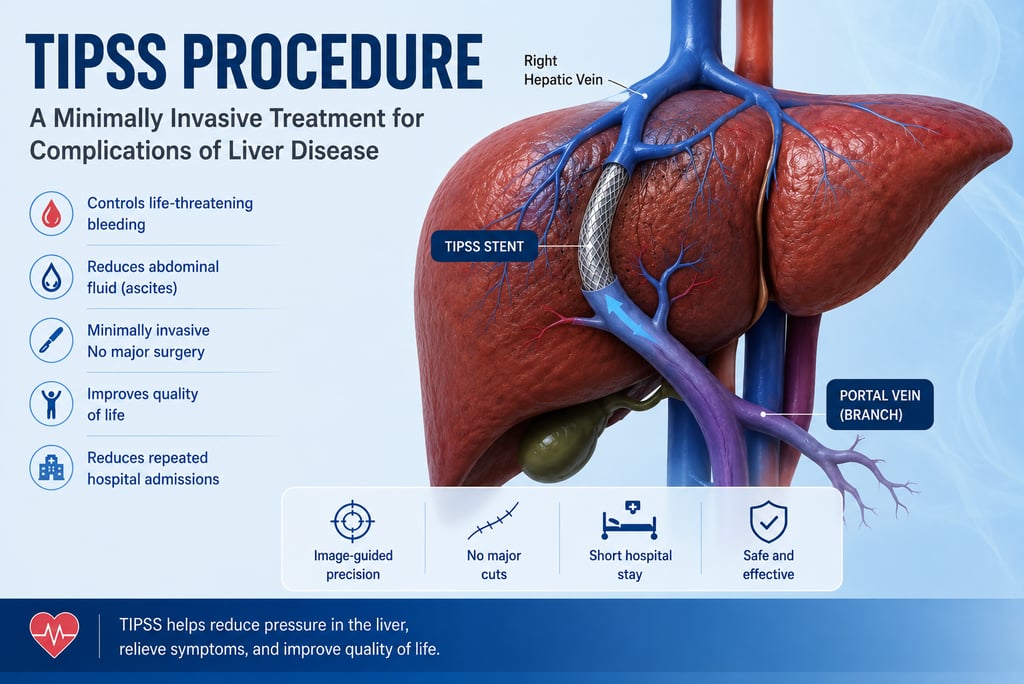
Liver disease can sometimes lead to serious complications caused by increased pressure within the liver's blood vessels, a condition known as portal hypertension. This increased pressure may result in life-threatening bleeding, fluid accumulation in the abdomen, or fluid around the lungs. Fortunately, a minimally invasive procedure called TIPSS can help manage these complications and improve quality of life.
Why Might You Need a TIPSS Procedure?
Your doctor may recommend TIPSS if you have liver disease and are experiencing complications such as:
Repeated episodes of vomiting blood due to variceal bleeding
Severe abdominal fluid accumulation (refractory ascites) that does not improve with medication
Fluid buildup around the lungs (hepatic hydrothorax)
Frequent hospital admissions related to these conditions
For many patients, TIPSS offers an effective solution when medical treatment alone is no longer sufficient.
How Does TIPSS Work?
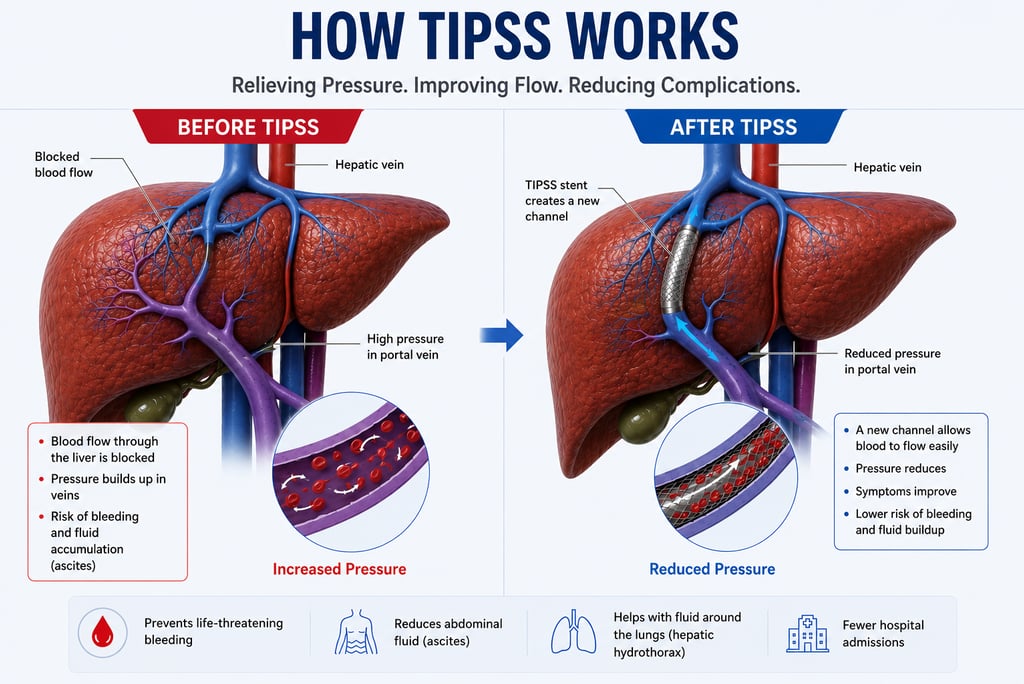
In patients with portal hypertension, blood flow through the liver becomes restricted, causing pressure to build up within the veins. This increased pressure can lead to bleeding and fluid accumulation.
During a TIPSS procedure, a channel is created within the liver and supported with a special stent. This allows blood to flow more freely, reducing pressure in the portal vein and helping control symptoms.
As a result, patients often experience fewer bleeding episodes and reduced fluid buildup.
Before and After TIPSS: Reduced portal pressure and improved blood flow.
Recovery After TIPSS
After discharge, patients are advised to:
Take adequate rest for a few days
Continue medications as prescribed
Follow dietary recommendations for liver health
Attend scheduled follow-up appointments
Regular monitoring helps ensure that the stent continues to function properly and that any potential complications are identified early.
Benefits of TIPSS
TIPSS provides several important benefits, including:
Control of life-threatening variceal bleeding
Reduction in abdominal fluid accumulation (ascites)
Minimally invasive treatment without major surgery
Improved quality of life
Reduced need for repeated hospital admissions
For appropriately selected patients, TIPSS can be a highly effective and sometimes life-saving procedure.
Risks and Possible Complications
Like all medical procedures, TIPSS carries certain risks.
Possible complications include:
Hepatic encephalopathy (confusion caused by toxin buildup affecting the brain)
Bleeding or infection, although these are uncommon
Stent narrowing or blockage over time
Most of these complications can be detected and managed effectively through regular follow-up and appropriate treatment.
Frequently Asked Questions
Is TIPSS a surgery?
No. TIPSS is a minimally invasive image-guided procedure and does not involve open surgery.
Is the procedure painful?
The procedure is performed under anesthesia and sedation, so patients typically do not experience pain during treatment.
How long does the procedure take?
Most TIPSS procedures take approximately 1–2 hours, depending on complexity.
How long will I stay in the hospital?
Most patients stay in the hospital for 1–3 days after the procedure.
Will TIPSS cure my liver disease?
No. TIPSS does not cure liver disease, but it effectively manages several serious complications associated with it.
What is hepatic encephalopathy?
It is a condition in which toxins affect brain function, leading to confusion or changes in behavior. It can occur after TIPSS but is often manageable with medications and dietary modifications.
Will I need follow-up after TIPSS?
Yes. Regular follow-up is essential to monitor liver health, assess stent function, and adjust medications when necessary.
Can the stent become blocked?
Yes. In some cases, the stent may narrow or become blocked over time, but this can often be treated with another minimally invasive procedure.
When Should You Consult a Specialist?
If you have liver disease and are experiencing recurrent bleeding, abdominal swelling, fluid around the lungs, or repeated hospital admissions, you may benefit from evaluation for a TIPSS procedure.
Consult an experienced interventional radiologist to determine whether TIPSS is the right treatment option for your condition.
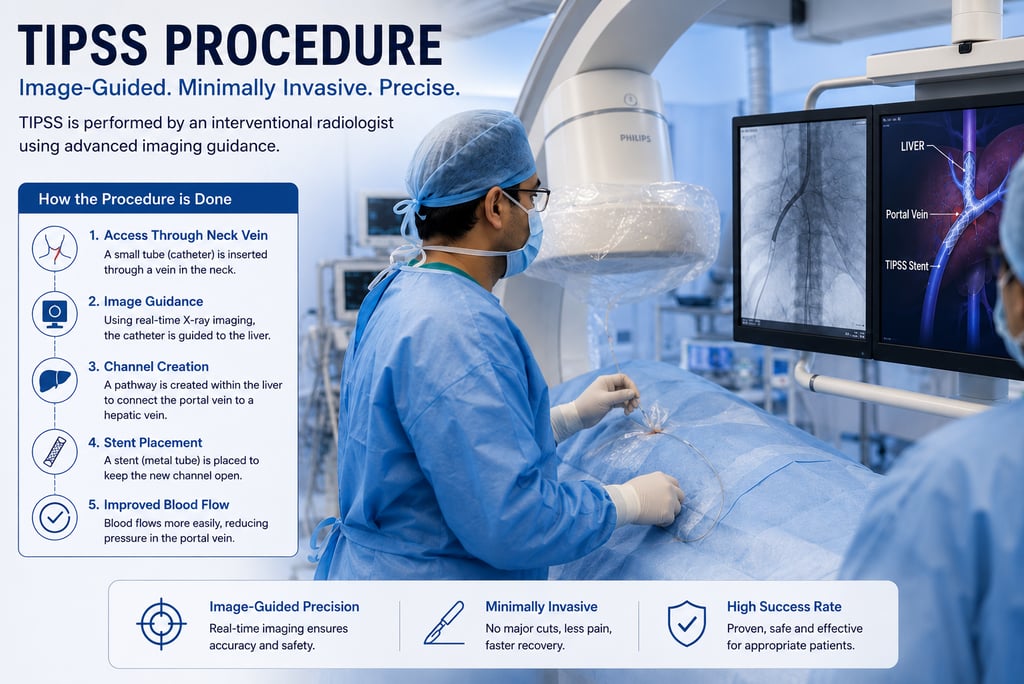
Image-guided TIPSS procedure performed by an Interventional Radiologist.
How is the Procedure Performed?
TIPSS is performed by an interventional radiologist using advanced imaging guidance.
The procedure involves:
Inserting a small tube through a vein in the neck
Creating a pathway within the liver using image guidance
Placing a stent to keep the newly created channel open
Because the procedure is minimally invasive, no major surgical cuts are required. It is typically performed under anesthesia and offers a faster recovery compared to traditional surgery.