Varicocele Embolization: A Minimally Invasive Treatment for Varicocele
Varicocele is a common and treatable condition that can affect comfort and fertility. Explore how Varicocele Embolization uses advanced Interventional Radiology techniques to treat abnormal veins without surgery, helping patients recover faster and return to daily life sooner.
Dr Abhishek Bairy
7/6/20264 min read
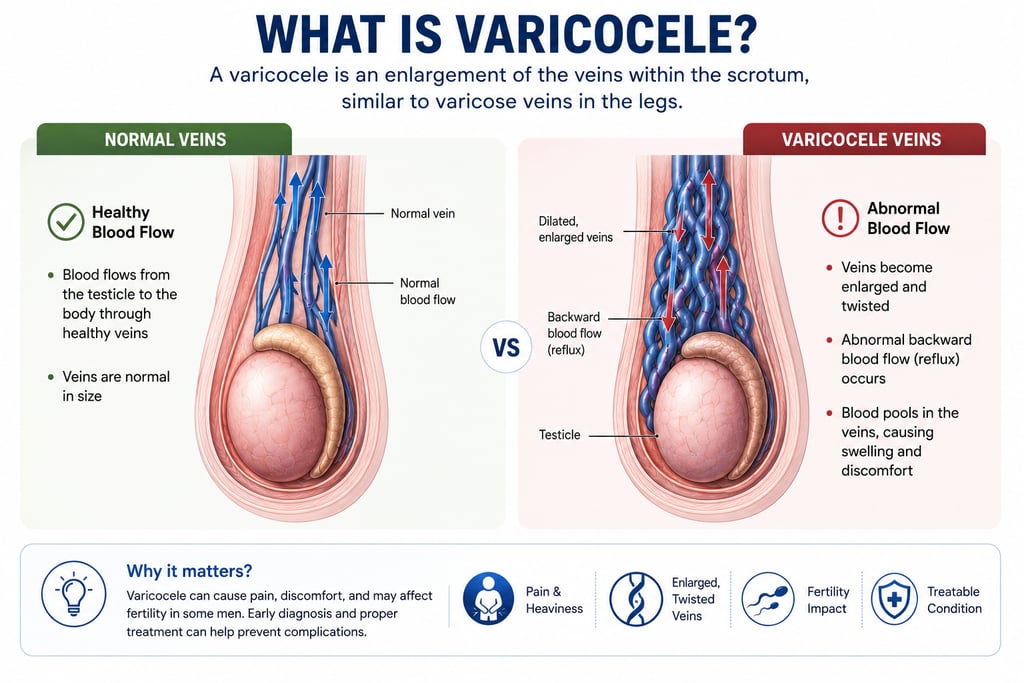
A varicocele occurs when veins inside the scrotum become enlarged due to abnormal blood flow. It most commonly affects the left side but can occur on both sides.
Some men may not experience any symptoms, while others may notice:
· A dull aching pain in the scrotum
· A feeling of heaviness or discomfort
· Visible or enlarged veins that may feel like a “bag of worms”
· Fertility-related issues in some cases
Varicoceles are common and are often discovered during a routine physical examination or fertility evaluation.
How is Varicocele Diagnosed?
Diagnosis usually begins with a clinical examination performed while standing.
Your doctor may:
· Examine the scrotum for enlarged veins
· Ask you to cough or strain (Valsalva maneuver)
· Assess whether swelling increases when standing and reduces when lying down
To confirm the diagnosis, an ultrasound with Doppler imaging is usually recommended.
Ultrasound helps:
· Visualize enlarged veins
· Measure vein diameter
· Detect abnormal backward blood flow (reflux)
It is considered the most reliable method for confirming a varicocele.
Do All Varicoceles Need Treatment?
No.
Many varicoceles do not cause symptoms and may never require treatment.
Observation and periodic follow-up are often sufficient when:
· There is no pain
· Fertility is normal
· The varicocele is small and discovered incidentally
Treatment is generally recommended only when the condition begins to affect quality of life, fertility, or testicular health.
When Should Treatment Be Considered?
Treatment may be recommended in the following situations:
Pain or Discomfort
Persistent symptoms such as:
· Dull aching pain
· Scrotal heaviness
· Discomfort that worsens with prolonged standing or physical activity
Fertility Concerns
Varicocele is one of the most common correctable causes of male infertility.
It may affect fertility by increasing the temperature around the testes and impairing sperm production.
Men experiencing difficulty conceiving may be advised to undergo:
· Semen analysis
· Fertility evaluation
· Varicocele assessment
In many cases, treating the varicocele can help improve sperm count, motility, and overall semen quality.
Testicular Changes
Particularly in adolescents and younger patients, a varicocele may result in:
· Reduced size of the affected testis
· Delayed testicular growth
· Progressive changes over time
Large or Progressive Varicocele
Treatment may also be considered when the varicocele continues to enlarge or causes visible swelling and concern.
What is Varicocele Embolization?
Varicocele embolization is a non-surgical, minimally invasive procedure performed by an Interventional Radiologist.
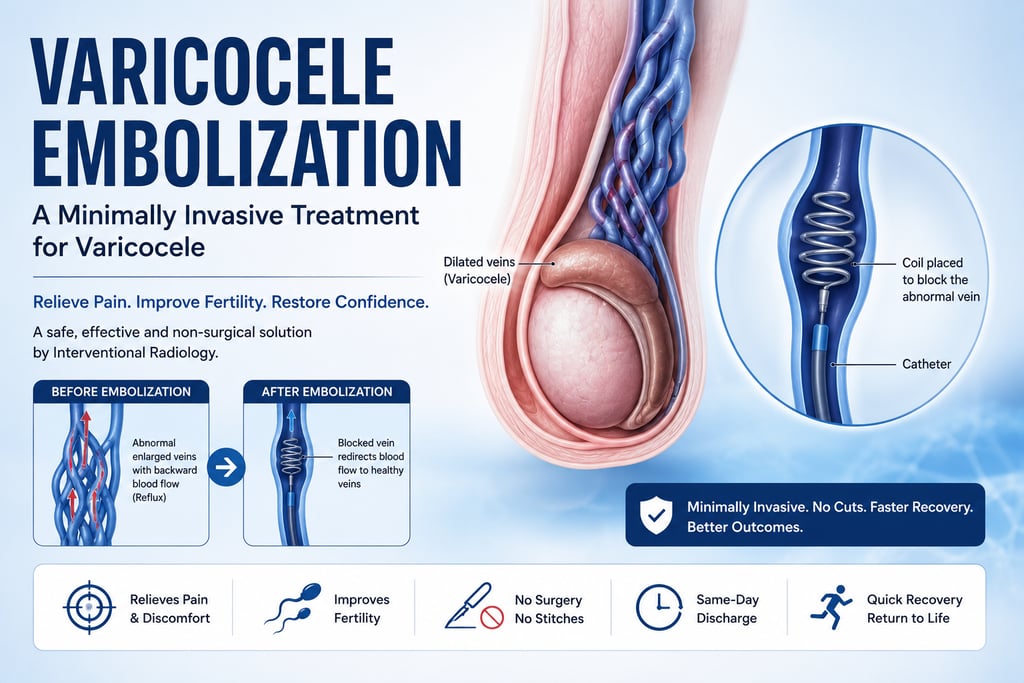
Rather than removing or tying off veins through surgery, the abnormal veins are closed from within using specialized materials. This redirects blood flow into healthy veins and relieves pressure within the affected vessels.
The procedure is performed using imaging guidance and does not require surgical incisions.
How is the Procedure Performed?
Varicocele is a common condition affecting men and is caused by enlargement of the veins within the scrotum, similar to varicose veins in the legs. While many varicoceles remain harmless and require no treatment, some can cause pain, discomfort, testicular changes, and even fertility problems.
Fortunately, modern Interventional Radiology offers a minimally invasive alternative to surgery known as Varicocele Embolization, which can effectively treat the condition with less pain and faster recovery.
What is a Varicocele?
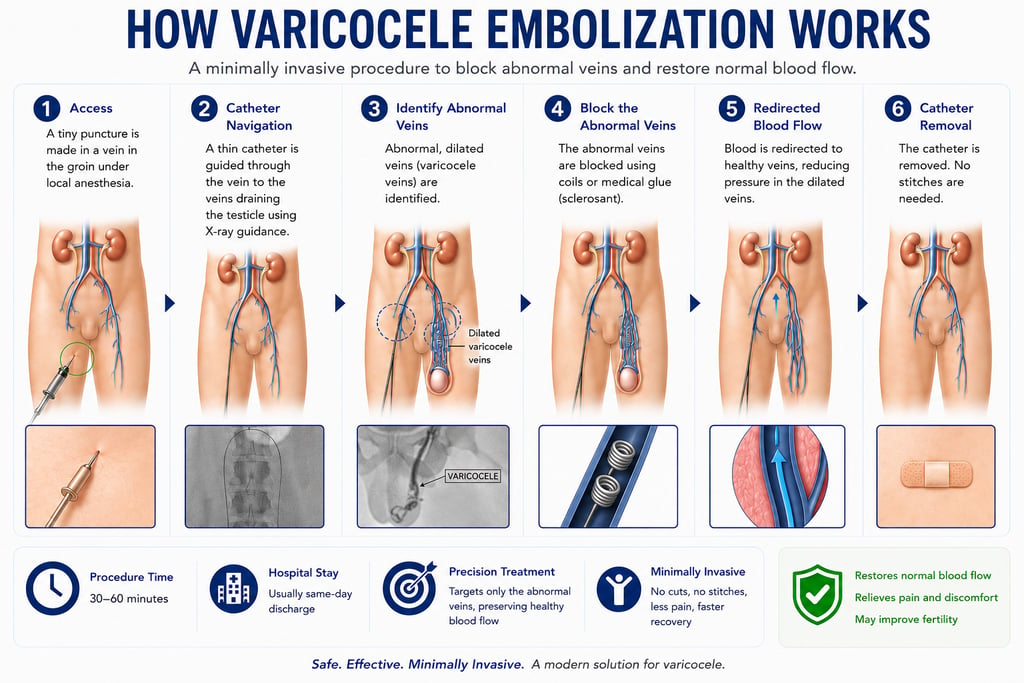
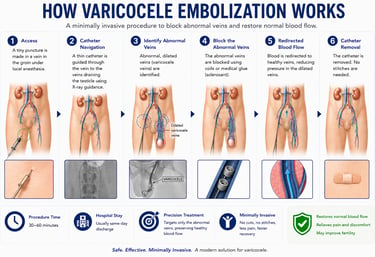
The procedure typically involves the following steps:
1. A tiny puncture is made in a vein, usually in the groin or neck.
2. A thin catheter is guided to the abnormal veins using X-ray imaging.
3. The affected veins are blocked using embolization materials.
4. The catheter is removed and no stitches are required.
Most procedures take approximately 30–60 minutes.
Patients are usually discharged on the same day.
Advantages of Varicocele Embolization Over Surgery
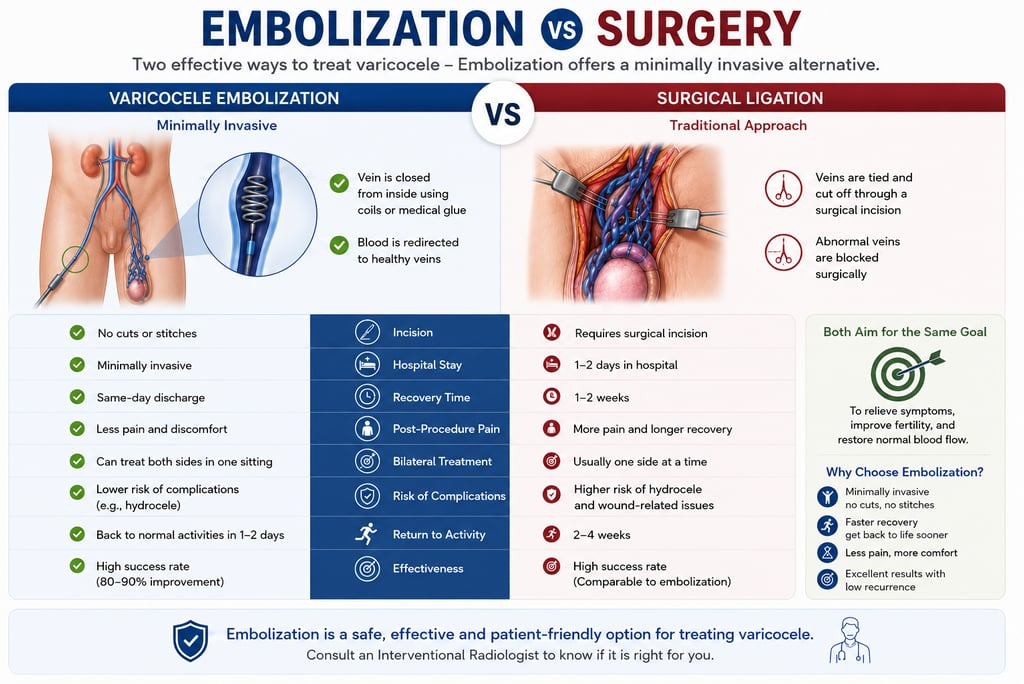
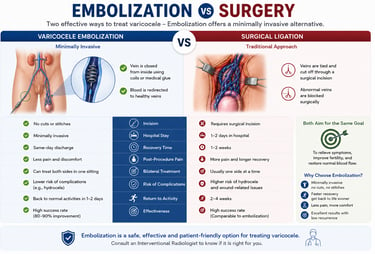
Varicocele embolization offers several advantages:
· No cuts or surgical stitches
· Minimally invasive treatment
· Faster recovery
· Less post-procedure discomfort
· Same-day discharge in most cases
· Ability to treat both sides during the same procedure
· Lower risk of complications such as hydrocele formation
For many patients, embolization provides an effective alternative to traditional surgery.
Recovery After Embolization
Recovery is generally quick.
Most patients can:
· Walk immediately after the procedure
· Return to normal daily activities within 24–48 hours
· Resume work within 1–2 days
Patients are usually advised to avoid heavy lifting and strenuous exercise for approximately one week.
Mild discomfort or bruising may occur but typically resolves within a few days.
Success Rates
Varicocele embolization has an excellent success record.
Studies and clinical experience show:
· Symptom improvement in approximately 80–90% of patients
· Improvement in semen parameters in many men with fertility concerns
· Low recurrence rates
Results may vary depending on the severity of the varicocele and individual patient factors.
Frequently Asked Questions
Is varicocele embolization painful?
Most patients experience minimal discomfort. The procedure is usually performed under local anaesthesia with mild sedation.
Is it an emergency treatment?
No. Varicocele treatment is typically planned. However, sudden severe testicular pain should always be evaluated urgently as it may indicate another condition requiring immediate attention.
Is embolization better than surgery?
Both treatments are effective. Embolization offers a minimally invasive approach with faster recovery and less discomfort for many patients.
Will it improve fertility?
In many cases, yes. Treatment may improve sperm count, sperm movement, and overall semen quality when varicocele contributes to infertility.
Are there any risks?
Complications are uncommon but may include mild bruising, temporary discomfort, recurrence, or rarely, migration of embolization material.
Can varicocele return after embolization?
Recurrence is uncommon but can occur. If necessary, additional treatment options remain available.
Is the procedure safe?
Yes. Varicocele embolization is a well-established and safe procedure when performed by an experienced Interventional Radiologist.
When Should You Consult a Specialist?
If you are experiencing scrotal pain, heaviness, visible enlarged veins, fertility concerns, or have been diagnosed with a varicocele, consult an Interventional Radiologist to discuss whether varicocele embolization may be an appropriate treatment option.
Early evaluation can help prevent symptoms from worsening and may improve long-term reproductive health.